

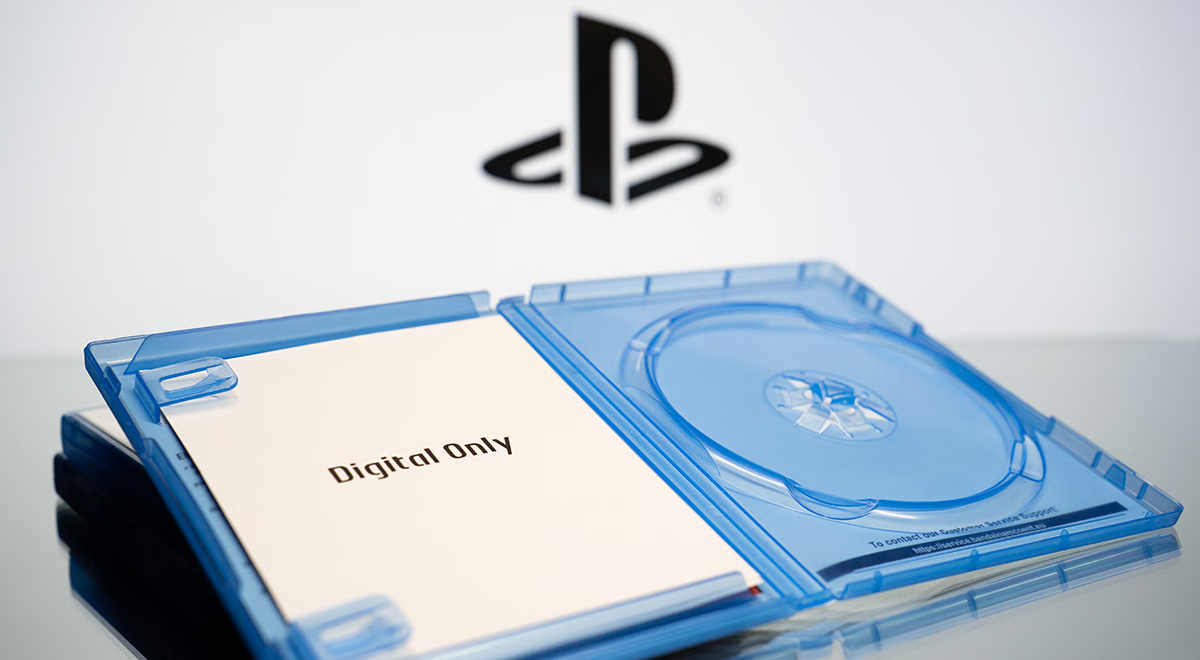
The debate over digital game ownership is getting bigger as more gamers move away from physical discs. Sony is now facing a proposed class action lawsuit in California over how it explains digital game purchases on the PlayStation Store.
Sony argues that its current disclosures are clear and that reasonable customers should not believe they permanently own the games they purchase. The company made this argument in a filing on August 21 in a California federal court.
The lawsuit was filed in June by a group of gamers. Their lawyers argue that Sony’s PlayStation Store does not provide a clear enough warning that purchasing a downloadable game actually gives the customer a license to use it.
This issue has become more important because of a new California law that took effect in 2025. The law requires digital stores to clearly tell customers that buying a digital product does not necessarily mean they own it permanently.
A Digital Game Is a License, Says Sony
When customers purchase a digital game on PlayStation, the checkout page includes fine print. It explains that the purchase is subject to Sony’s PlayStation Terms of Service and Software Product Licensing Agreement.
Those documents say that customers can use the software under the conditions of the license but do not actually own the product. Another section explains that the software is licensed rather than sold.
The gamers challenging Sony argue that these explanations may not be enough because the important language is buried inside lengthy legal documents. In other words, customers may complete a purchase without clearly understanding what they are actually getting.
Physical Games vs Digital Games
| Feature | Physical Game | Digital Game |
|---|---|---|
| What you receive | Physical disc or cartridge | Digital access |
| Can you resell it? | Usually yes | Usually no |
| Ownership experience | Feels like owning an object | Generally governed by a license |
| Dependence on store/account | Lower | Higher |
| Access can depend on platform rules | Limited | More likely |
Sony’s Main Argument
Sony has also made a broader argument: people should already understand that a digital game is not the same as owning a physical object.
The company points to the basic nature of digital products. A digital game can be downloaded by millions of customers, so Sony says consumers should not assume that paying for a digital copy gives them traditional ownership.
However, that argument may not completely settle the legal question. The lawsuit focuses on whether Sony’s wording meets California’s requirement for a clear and conspicuous warning.
Why This Matters to Gamers
The case could have an impact beyond PlayStation. Digital purchases are now common across gaming, movies, music, software, and other entertainment services.
For gamers, the biggest concern is simple: what happens when a game is removed from a store or access is changed?
If digital games are treated as licenses instead of permanent property, customers may have fewer rights than they expect.
Sony’s case highlights an important change in gaming. Buying a game digitally may feel like owning it, but legally, the situation can be very different.
The outcome of this lawsuit could help define how clearly digital stores must explain that difference to consumers.