
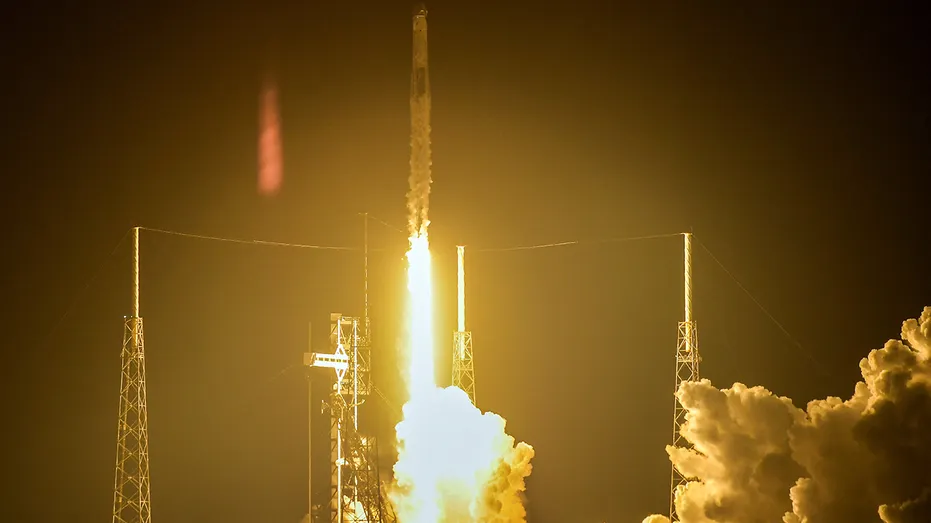
SpaceX has once again marked a major milestone in human spaceflight with the successful launch of its 12th long-duration crew mission to the International Space Station. The mission, known as Crew-12, lifted off from Cape Canaveral Space Force Station in Florida early Friday morning, carrying four astronauts on an eight-month journey in orbit.
This launch highlights the growing role of private companies in space travel and the strong international cooperation that continues aboard the ISS.
Crew-12 Launch Details and Spacecraft
The mission launched aboard a Falcon 9 rocket, one of the most reliable launch vehicles ever built. The two-stage rocket carried the Crew Dragon capsule, named Freedom, into orbit at around 5:15 a.m. EST. Within minutes, the rocket reached speeds of more than 17,000 miles per hour before releasing the capsule safely into space.
A key highlight of the launch was the successful landing of the reusable booster back at Cape Canaveral. This recovery system remains central to SpaceX’s goal of lowering the cost of space missions while increasing launch frequency.
Meet the Crew Heading to the ISS
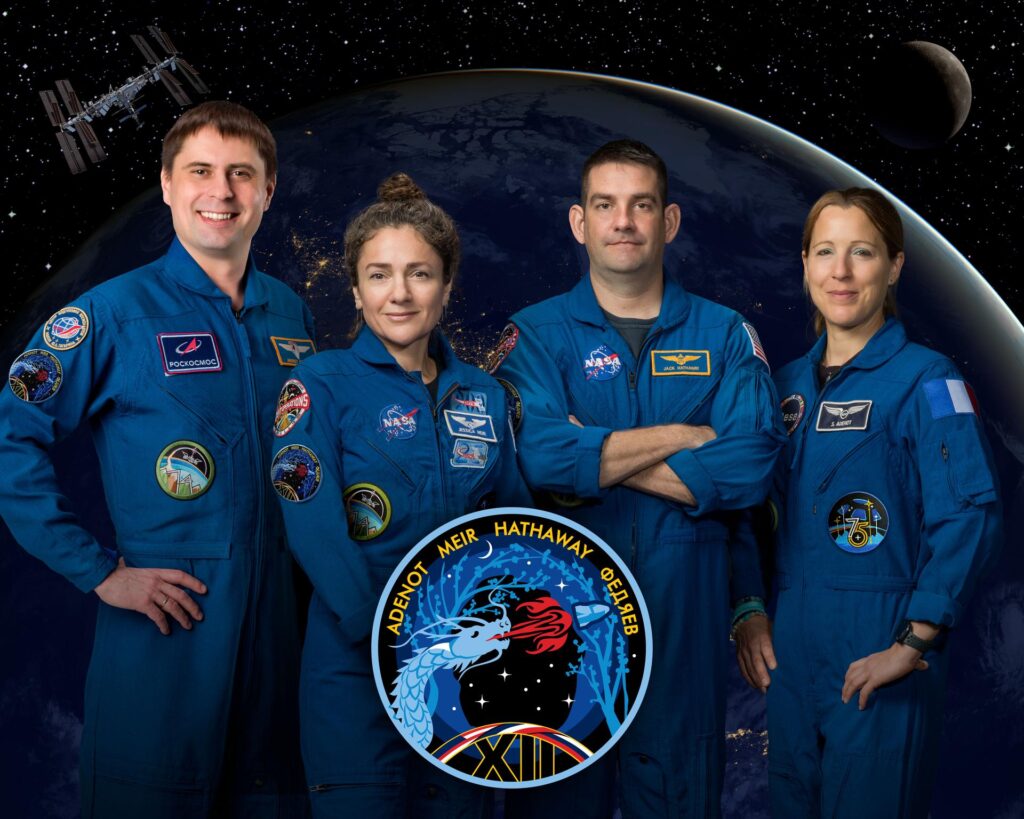
Crew-12 is led by NASA astronaut Jessica Meir, a veteran space traveler known for taking part in the first all-female spacewalk. She is joined by Jack Hathaway, a former U.S. Navy fighter pilot making his first trip to space, European Space Agency astronaut Sophie Adenot from France, and Russian cosmonaut Andrey Fedyaev on his second ISS mission.
Their diverse backgrounds reflect the international nature of the space station and its shared mission of scientific discovery.
Science Goals of the Mission
Once docked with the space station, the crew will focus on a wide range of scientific and technical experiments. These include research on bacteria linked to pneumonia, which may help improve treatments on Earth. The team will also study plant growth and microbe behavior in microgravity, research that could support long-term human missions beyond Earth.
Much of this work supports future exploration plans under NASA’s Artemis program, which aims to return humans to the Moon and eventually send astronauts to Mars.
How Crew-12 Compares to Earlier Missions
| Feature | Crew-12 Mission | Earlier ISS Missions |
|---|---|---|
| Duration | 8 months | 6 months (average) |
| Spacecraft | Crew Dragon Freedom | Soyuz / earlier Dragon |
| Launch System | Reusable Falcon 9 | Mostly expendable rockets |
| Crew Mix | U.S., European, Russian | Mostly single-agency |
This comparison shows how modern missions are becoming longer, more efficient, and more collaborative than ever before.
Why This Mission Matters
Crew-12 represents the 12th time NASA has used a SpaceX vehicle for long-duration missions since 2020. It proves that commercial partnerships are now a stable part of space exploration. The ISS itself, the largest human-made object in space, continues to serve as a symbol of peaceful global cooperation.
NASA has confirmed plans to operate the station until 2030, ensuring many more missions like Crew-12. For readers interested in space technology, you can also explore our other articles on reusable rockets and upcoming lunar missions to better understand what lies ahead.
As Crew-12 begins its journey, it carries not just astronauts, but also the future of human space exploration.