
Meta Description:
Samsung has launched the Galaxy Z TriFold, its first tri-folding smartphone. Discover its features, price, market impact, and how it compares to other foldable devices.
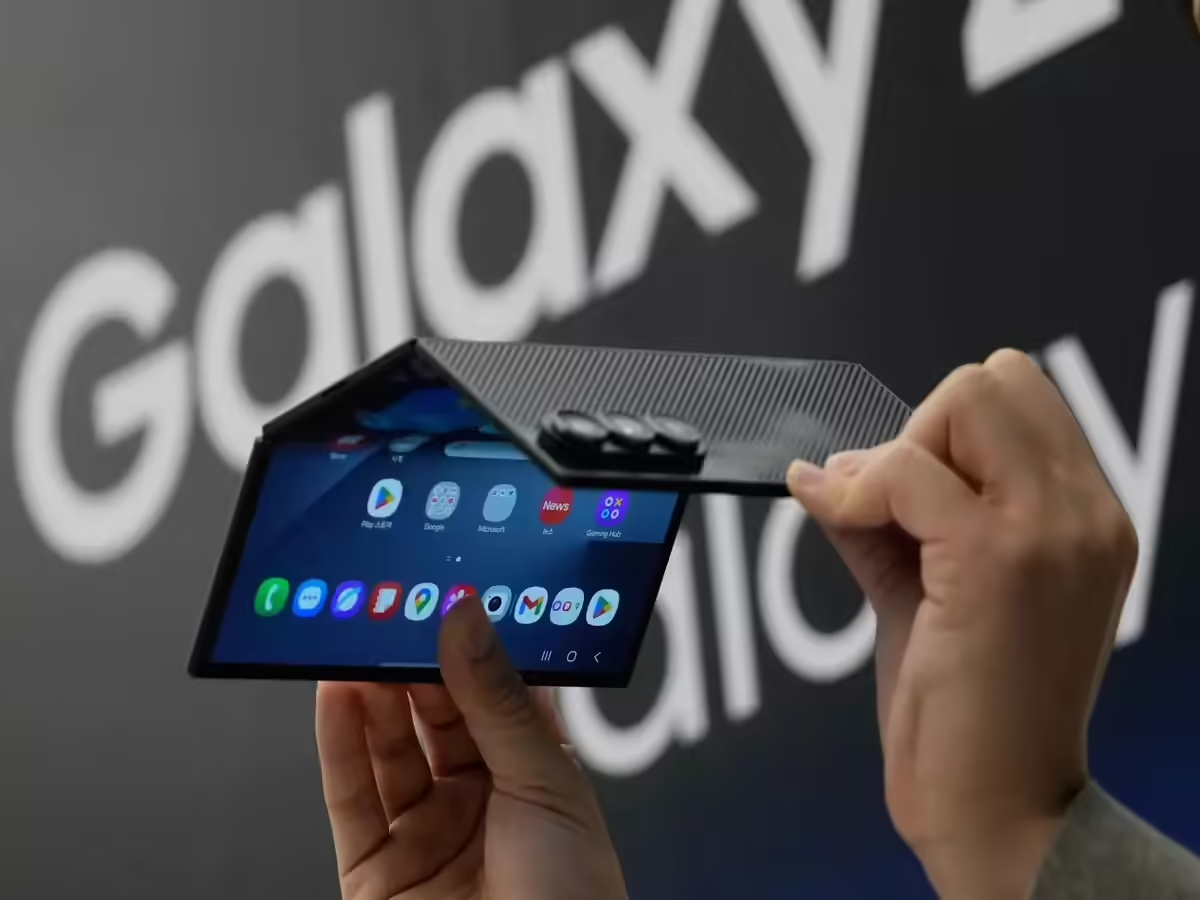
Samsung has once again pushed the boundaries of smartphone innovation with the arrival of its first tri-folding phone, the Galaxy Z TriFold. This new device marks a major step forward in the foldable segment, especially as global competition continues to intensify. With brands like Huawei and Apple moving toward foldable designs, Samsung is aiming to stay ahead by introducing a phone that unfolds into a tablet-like display using three panels.
A Bigger and Smarter Display Experience
The Galaxy Z TriFold features a stunning 253.1 mm (10-inch) screen when fully opened. Thanks to its multi-fold structure, the display becomes almost 25% larger than the Galaxy Z Fold 7. This makes the TriFold ideal for users who want a bigger canvas for watching videos, working, reading, or multitasking.
The device is equipped with Samsung’s largest flagship battery, offering long-lasting performance. It also supports super-fast charging, powering the phone up to 50% within just 30 minutes. This is a meaningful upgrade for people who require strong battery backup along with a premium screen experience.
Price and Market Rollout
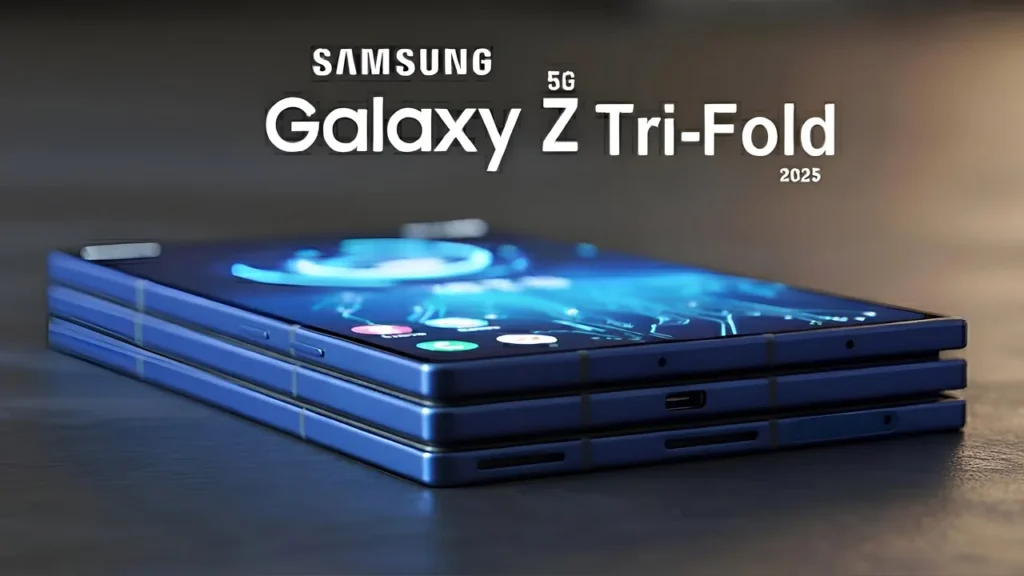
Samsung has priced the Galaxy Z TriFold at around 3.59 million won (approximately $2,440). The company highlights that rising component costs, especially memory chips, made pricing a challenging decision.
The device will first launch in South Korea on December 12, followed by markets like China, Singapore, Taiwan, and the UAE later this year. The U.S. release is expected in early 2026. Samsung also indicated that the TriFold is aimed at users who genuinely want this type of device, rather than being a mass-market offering.
Galaxy Z TriFold vs Galaxy Z Fold 7: Quick Comparison
Here’s a simple comparison table to understand what’s new and different:
| Feature | Galaxy Z TriFold | Galaxy Z Fold 7 |
|---|---|---|
| Screen Size (Unfolded) | 10-inch | Smaller by 25% |
| Folding Mechanism | Tri-fold | Dual fold |
| Battery | Largest flagship battery | Smaller capacity |
| Charging Speed | 50% in 30 minutes | Slower |
| Price | Higher | More affordable |
| Usage Focus | Productivity, multitasking | General foldable users |
This shows that Samsung is not just refreshing the foldable experience—it’s trying to redefine it.
Competitive Pressure Is Rising
Competition in the foldable segment is heating up. Huawei introduced the industry’s first three-way folding device last year, and Apple is also expected to reveal its first foldable soon. However, analysts believe that foldable phones will still remain a niche category for now due to high prices and manufacturing limitations.
Experts also say that since this is a first-generation tri-fold, there may be concerns about durability and overall refinement. Samsung plans to observe market reactions closely before pushing for larger production volumes.
Is the Market Ready for a Tri-Fold?
Despite challenges, the foldable market is expected to continue growing. Forecasts suggest that foldable smartphones will make up less than 2% of the total market this year but could see strong growth in 2026 and 2027, especially once Apple enters the category.
The Galaxy Z TriFold is more than a new gadget—it represents Samsung’s vision of the future. By introducing a tri-fold device, Samsung is sending a clear message: the evolution of smartphones is far from over.
As users demand bigger screens, more power, and easier portability, devices like the TriFold could become the starting point for the next generation of mobile technology.