

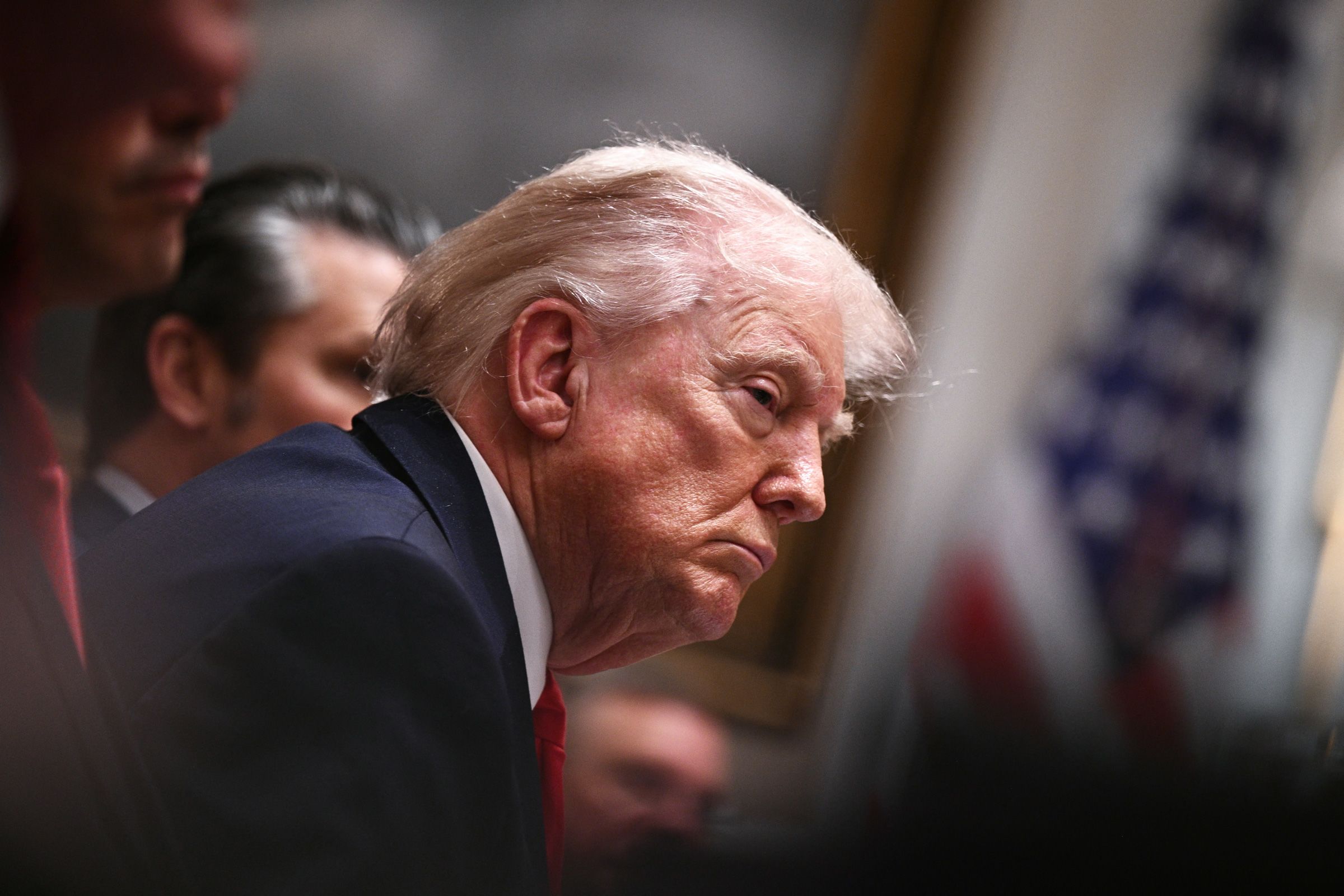
Donald Trump’s long-running claims about the 2020 presidential election once again became a major topic of discussion following his recent interview on Meet the Press. The conversation gained attention after the former president was repeatedly asked to provide evidence supporting his election fraud allegations.
For years, Trump has argued that the 2020 election was unfairly conducted. However, despite making these claims in speeches, interviews, and public appearances, he has not publicly presented verifiable evidence that proves widespread election fraud changed the outcome of the race.
Why the Interview Became Controversial
During the interview, Trump repeated his belief that the 2020 election was rigged. The discussion became tense when the host challenged those statements and pointed out that there is no publicly available evidence supporting the claims.
Rather than providing specific proof, Trump continued to insist that evidence exists. As the questioning continued, the exchange became increasingly heated, drawing significant attention from political observers and media outlets.
The interview highlighted a recurring issue in political debates: the difference between making a claim and providing evidence to support it.
Trump’s Evolving Election Narrative
In the years immediately following the 2020 election, Trump often suggested that proof of election wrongdoing would eventually emerge. Over time, his message changed. Instead of saying evidence would be found, he began stating that the evidence had already been discovered.
Despite these statements, details about who found the evidence or what specific information supports the claims have remained unclear. This has led critics to argue that the allegations continue to lack factual support.
Claims vs Evidence: Understanding the Difference
The debate surrounding Trump’s election claims can be understood through a simple comparison.
| Claims | Evidence |
|---|---|
| Statements or allegations made by an individual | Verified facts, documents, or data that support a claim |
| Can be based on opinions or beliefs | Must be independently confirmed |
| Do not automatically prove something happened | Help establish credibility and accuracy |
| Often require further investigation | Serve as proof when properly verified |
This distinction became the central issue during the interview, as questions focused on whether supporting evidence actually exists.
What the Interview Revealed
The conversation also showed the challenges politicians face when interviewed by independent news organizations. Unlike friendly or supportive media appearances, independent interviews often involve direct questioning and fact-checking.
Observers noted that the host repeatedly asked for clarification and supporting information. The inability to provide specific examples became one of the most discussed moments of the interview.
At the same time, supporters of Trump argue that concerns about election integrity deserve continued examination. Critics, however, maintain that serious allegations require substantial proof before they can be accepted as fact.
Why This Story Matters
The controversy goes beyond one interview. It touches on broader issues such as public trust, election confidence, media accountability, and political communication.
When public figures make major claims, many voters expect those statements to be supported by clear and verifiable evidence. Journalists, meanwhile, often view it as their responsibility to ask difficult questions and seek clarification.
The latest Meet the Press interview served as another example of this ongoing tension. As discussions about the 2020 election continue, questions surrounding evidence and accountability are likely to remain at the center of the national conversation.
Conclusion
Trump’s recent interview renewed attention on election-related claims that have been debated for years. While he continues to insist that evidence exists, requests for publicly verifiable proof remain unanswered. The exchange underscores an important principle in politics and journalism alike: extraordinary claims are often expected to be backed by credible evidence.