

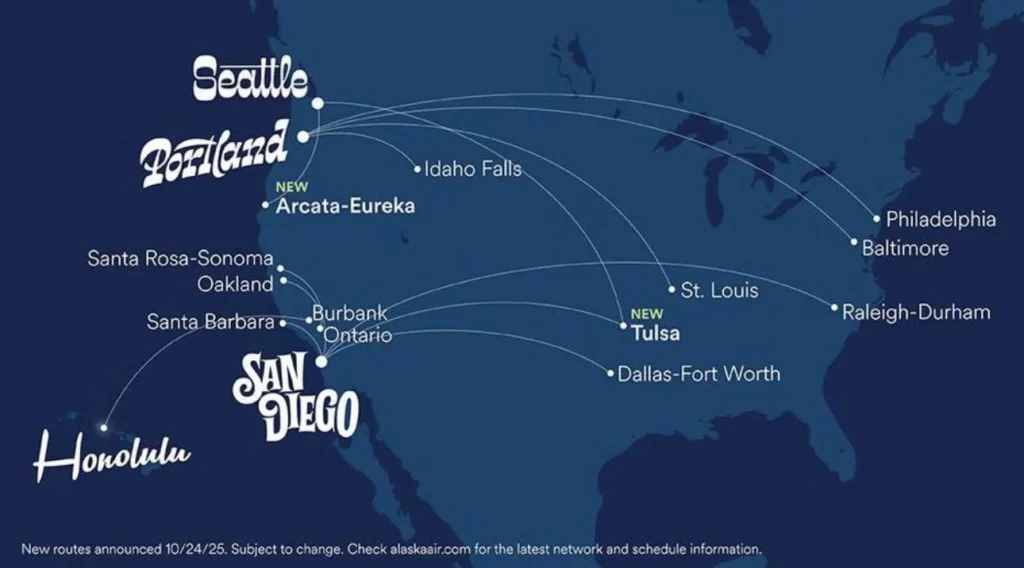
At first glance, it feels confusing to see Alaska Airlines flying internationally from St. Louis. The airline is closely tied to the US West Coast, with its strongest presence in Seattle, Anchorage, and California cities. St. Louis does not naturally fit into that network. Yet, the airline’s seasonal route from St. Louis to Mexico exists for clear and practical reasons.
Once you look beyond the map, the strategy starts to make sense.
Winter Demand Shapes Airline Decisions
Airlines do not plan routes based on geography alone. Demand plays a much bigger role. During winter, travel demand in the Pacific Northwest drops sharply. Leisure travel slows, and fewer people fly to colder regions. This creates a problem for Alaska Airlines, as many of its core markets see weaker passenger numbers.
Instead of parking planes or flying half-empty routes, the airline shifts capacity to places where winter demand increases. Warm destinations in Mexico attract travelers looking for sun, beaches, and short holidays. This seasonal demand is strong and predictable.
Why St. Louis Fits the Plan
St. Louis may not be a hub, but it has a steady base of leisure travelers. The city is already used to vacation-focused flights, and passengers are comfortable flying for short international trips. Alaska Airlines used this to its advantage by launching a seasonal route from St. Louis Lambert International Airport to Puerto Vallarta.
The route operates only once a week, usually on Saturdays. This limited schedule keeps costs low and reduces financial risk. The airline uses its Boeing 737 MAX 9, which offers enough seats without overcommitting aircraft during a slow season.
Guaranteed Revenue Reduces Risk
One of the strongest reasons this route works is Alaska Airlines’ partnership with Apple Vacations. A large block of seats on each flight is booked in advance as part of holiday packages. This guarantees income before the plane even leaves the gate.
Any seats sold directly by Alaska Airlines become additional profit. During winter, when demand in its main markets is weak, this kind of guaranteed revenue is extremely valuable.
How This Route Compares to Traditional Flights
The difference between this seasonal route and a standard hub route is clear:
| Factor | Seasonal St. Louis Route | Traditional Hub Route |
|---|---|---|
| Flight Frequency | Once per week | Daily or multiple flights |
| Demand Risk | Low due to advance bookings | Higher in winter |
| Aircraft Use | Efficient in slow season | Often underused |
| Passenger Type | Leisure travelers | Business and mixed travel |
This comparison shows why Alaska Airlines prefers this model during the winter months.
Competition in the Market
St. Louis is dominated by Southwest Airlines, which already serves many leisure destinations. Alaska Airlines is not trying to compete across the entire network. Instead, it focuses on a narrow seasonal window where demand is stable and risk is low.
By keeping its presence limited, the airline avoids long-term exposure if market conditions change.
Final Thoughts
Alaska Airlines’ most unexpected route is not a gamble. It is a carefully planned response to seasonal demand. By choosing the right city, limiting frequency, and securing guaranteed bookings, the airline turns a slow winter period into a steady revenue opportunity.
What looks unusual on the surface is actually a smart and disciplined business move.