
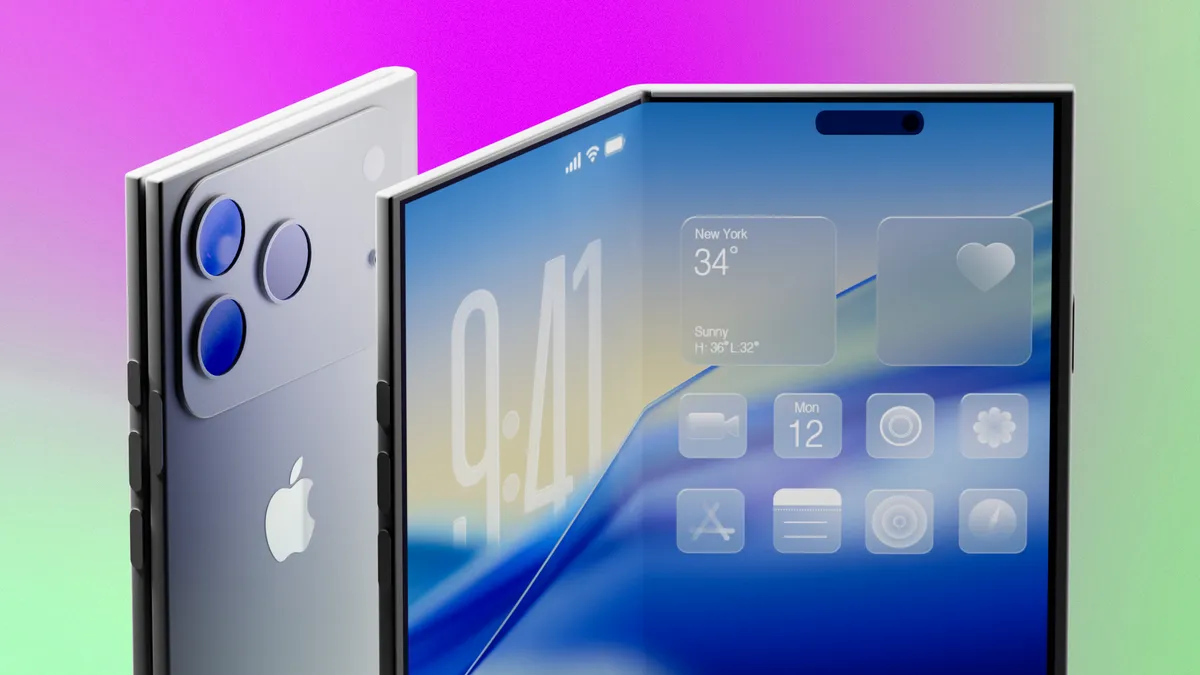
Apple has not officially revealed a foldable iPhone, but the long-rumored iPhone Fold is slowly becoming clearer. After years of leaks and industry talk, analysts now agree that Apple is finally preparing its first foldable phone. Instead of launching it as a limited experiment, Apple is expected to position the iPhone Fold as a high-end flagship device.
As always with Apple, nothing is confirmed until the company makes an announcement. Features can change, and timelines may shift. Still, recent reports offer the most detailed look yet at Apple’s foldable plans and how the iPhone Fold may compete with existing foldable phones. If you regularly follow Apple product updates on our site, you will notice Apple’s careful and slow approach to new form factors.
When Could the iPhone Fold Launch?
Rumors of a foldable iPhone date back to 2017, but serious progress appears to have happened recently. Most reliable sources now point to fall 2026, possibly alongside the iPhone 18 lineup. Some analysts believe sales may continue strongly into 2027 due to limited early supply.
There is still a chance the launch could move to 2027. Apple may delay the device if it is not fully satisfied with durability, especially around the hinge and display. Apple has done this before with other products, choosing quality over speed.
iPhone Fold Design and Size Expectations
The iPhone Fold is expected to use a book-style foldable design, similar to existing large foldable phones. When opened, it should look like a small tablet, close to the size of an iPad mini. Current leaks suggest an inner display between 7.7 and 7.8 inches.
When folded, the device should work like a normal smartphone, with an outer display around 5.5 inches. The phone may be shorter and wider than standard iPhones, giving it a more square shape. Thickness could range from about 4.5 to 5.6mm when unfolded and 9 to 11mm when folded.
Display Technology and Crease Control
The display is the biggest challenge for foldable phones, and Apple seems to be taking this seriously. Reports suggest Apple will use a crease-less OLED display, supplied by Samsung Display. The panel is said to use a metal support layer that spreads pressure evenly while folding.
Apple reportedly wants the crease to be nearly invisible before entering the foldable market. If successful, this could give the iPhone Fold a clear advantage over many current foldable devices.
Cameras, Security, and Battery
Camera leaks suggest a four-camera setup, including two rear cameras, one outer selfie camera, and one under-display inner camera. Apple is also expected to skip Face ID and instead use Touch ID built into the power button, keeping both screens free from notches.
Battery size could range between 5,000 and 5,800mAh, making it the largest battery ever used in an iPhone. The phone is also expected to run on a future A-series chip and Apple’s in-house modem.
iPhone Fold vs Typical Foldable Phones
| Feature | iPhone Fold (Rumored) | Typical Foldable Phone |
|---|---|---|
| Launch Window | Late 2026 | Already available |
| Inner Display | ~7.8 inches | 7.6–8 inches |
| Crease Visibility | Nearly invisible | Slightly visible |
| Biometric Security | Touch ID | Face unlock or fingerprint |
| Starting Price | $2,000+ | $1,600–$1,900 |
Expected Price and Final Thoughts
The iPhone Fold is expected to be Apple’s most expensive iPhone ever, with prices estimated between $2,000 and $2,500. This places it closer to Apple’s premium iPads and Macs than standard smartphones.
Many details remain unknown, including the final name, software features, and long-term durability. For now, the safest assumption is that Apple is taking its time. If the iPhone Fold launches in 2026, it will likely reflect years of careful planning and refinement rather than a rushed release.